The launch of DeepSeek in January 2025 hit America's tech giants like a full-blown case of PTSD. The shock was both financial and symbolic. NVIDIA alone lost between $589 and $600 billion in market capitalization in a single day. The broader U.S. tech sector shed roughly $1.2 trillion.
At the same time, the old narrative that AI had to be insanely expensive began to crack. A Chinese startup had just shown that a reliable, genuinely intelligent model could be almost free, and, most importantly, open source. Investors suddenly started asking an uncomfortable question: are they massively overpaying for the compute race? Confidence in the old AI giants weakened, because users now had a "smart" model in their own hands.
Then came the flood of other Chinese models and chatbots, the tools most people actually use for work and everyday tasks. For example, I keep DeepSeek installed alongside my other apps. I value it for its clean minimalism and real productivity. It is also helping me research and edit this very article as I write.
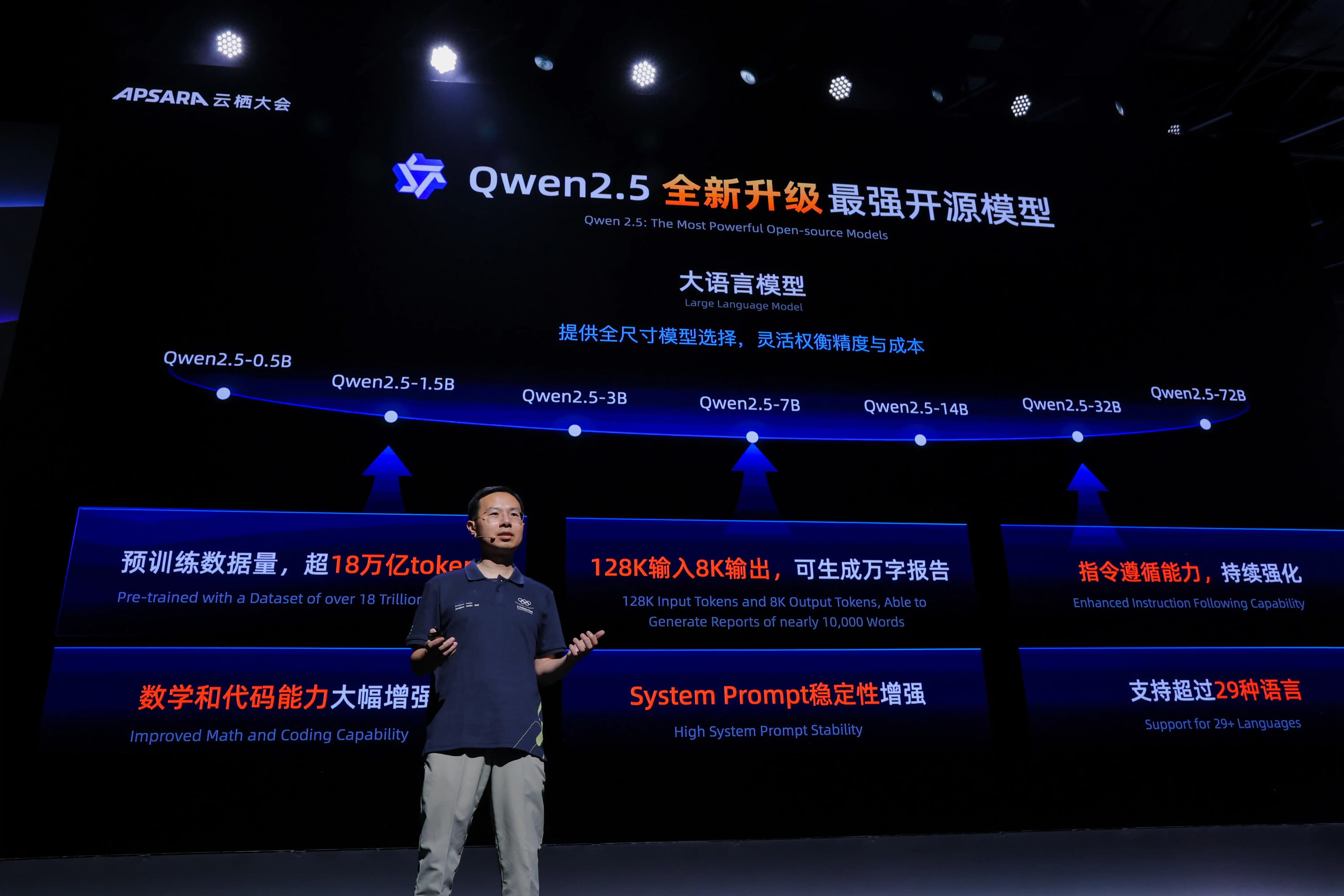
As an experiment, I also downloaded Qwen and Kimi to my phone. Their capabilities left a strong impression. In some ways, the open, cheap, or completely free East is already outperforming the closed and expensive West. A Stanford study points in the same direction: the gap between American and Chinese models has narrowed to almost nothing.
First Impressions and Reality
Right away, I should say this: my experience and my opinion may differ from yours.
I like using DeepSeek. It does not have cross-chat context features, meaning it cannot search through previous conversations by keyword and pull out relevant information. But as a conversational partner, it is precise and concise. You can, of course, ask it to change its tone inside a single chat. But do you really need to? Loyal users like DeepSeek precisely for its minimalism.
The interaction is mostly text-based. You can dictate prompts, but dictation is limited by time and character count. There are no voice replies. And that has its own charm. It feels as if the developers did this not only because of technical limitations, but also as a kind of signature style. Prompts without extra words. Answers without fluff or sentimentality. An interface with only what is necessary and basic.
The free chatbot is updated regularly. Recently, it added an "Expert" mode. The catch is that you still cannot switch between modes inside the same chat, and Expert mode does not support file uploads.
The strongest wave of criticism is not about the quality of the answers. It is about security and privacy. After checks by NowSecure and other publications, DeepSeek's iOS app was accused of unsafe data storage, weak encryption, and extensive collection of user information. So yes, people trust this chatbot, but with reservations.
In discussions, you can see a clear layer of anxiety around privacy. Users ask whether the security concerns are legitimate and why companies block the app even on personal devices. For a Western audience, DeepSeek is not just another "better or worse than ChatGPT" debate. The real question is whether you can trust a Chinese chatbot with your data and actual work tasks.
One important note: in this article, I am looking specifically at chatbots, the tools ordinary users interact with directly. Not at models from the perspective of programmers or researchers.
Some Chinese chatbots are already being called ChatGPT killers. After using Qwen, I can partly agree.
The interfaces, functions, and even the style of communication are similar. It is probably no coincidence that American developers accused the Chinese of distillation, training their bots on interactions with OpenAI and Anthropic models.
Qwen is developed by Alibaba Group. That explains a lot. The full team composition is not publicly disclosed; key decisions are made inside a closed corporate hierarchy. Media reports about top engineers leaving in 2026 only underline how much the project depends not on the community, but on specific people within the company.
What we have here is not an open-source utopia, but a high-stakes corporate bet: models, data centers, cloud infrastructure, APIs, and a consumer chatbot as an entry point into the ecosystem. Free access here is not a gift, it is the wide end of the funnel. Real monetization starts later: when businesses move tasks to Alibaba Cloud, buy API access, connect extended limits, or integrate into the company's e-commerce infrastructure.
This is visible at the user level too. The UX feels raw. At the time of writing this article, there is no Qwen mobile app in the European App Store, so I have to use the web version as a PWA through Chrome. The built-in Coder can see the entire GitHub repository, but it does not allow committing directly from the sandbox, you have to copy the code manually. For a tool that positions itself as a proper working AI assistant, this is a strange half-measure.
I encountered censorship not only on political topics. When I asked Qwen to edit a paragraph about Qwen itself and Alibaba, the chatbot triggered a content safety warning and refused to continue. The kill switch activates not only on Taiwan, Tiananmen Square, or the Trump-Xi summit in Beijing. Sometimes the model does not even want to touch text about its own corporate nature.
It is worth noting that ChatGPT has its own censorship: it smooths over sharp corners in political texts with lengthy reasoning, conclusions, and sermons, even when nobody asked for them.
Still, Qwen remains a useful tool. Developers and freelancers value it for multimodality, code work, and practical tasks, for example, summarizing photos of pages or debugging scripts.
Doubao is ByteDance's AI chatbot. And that immediately changes the whole picture. This is not just another Chinese alternative to ChatGPT, it is the company that created TikTok trying to turn AI into a mass daily habit.
In China, Doubao has already become a giant. By August 2025, WIRED reported 157 million monthly active users. Later Reuters wrote about 155 million weekly users, a sign that Doubao is not just being downloaded, but used as a regular part of daily life. This is no longer a niche tool for techies, but a consumer product on a national scale.
In Europe, the user does not meet Doubao directly, but Dola, the international consumer shell of the same ByteDance ecosystem. On the surface it looks like a cute, ordinary AI assistant: write a report, generate an image, plan a trip, summarize an article, learn a language, find a recipe, just chat. No Chinese flagship on the facade. Just a free app that promises to make life easier.
This is exactly where the difference from DeepSeek and Qwen becomes clear. DeepSeek looks ascetic: text, precision, minimum extras. Qwen is closer to a working tool for code, tables and multimodal tasks. Dola goes in the opposite direction: I open the app and see not a terminal, but thousands of bots, from learning English to dating advice. Many are styled as anime characters or fictional roles. It is a small market of cheap AI personalities right in your phone.
That is where Dola's strength lies. It does not require the user to understand what is under the hood. It does not sell itself as a technological breakthrough. It speaks simply: write, ask, generate, talk, solve a task, kill boredom. ByteDance is once again doing what it does better than most: it does not explain the technology, it turns it into a habit.
But the price of this simplicity appears at the bottom of the page. Google Play states that Dola may share messages and audio with third parties, and may collect personal info and messages. The privacy policy mentions the collection of prompts, chat history, uploaded files, voice recordings, photos and usage data. Free entry into the ByteDance ecosystem is paid for with your data.
Kimi is the chatbot from the Chinese startup Moonshot AI. On the user level, it feels less like a regular chatter and more like an attempt to build a small AI office inside the app.
Originally, Kimi shot to popularity thanks to long context, analysis of large texts, and AI search. Reuters wrote that this was exactly how Moonshot AI gained traction in 2024. Then DeepSeek arrived and pushed everyone aside: by June 2025, Kimi had dropped from third to seventh place among Chinese AI apps by monthly audience.
Now Kimi is returning not just as a chatbot, but as an agent environment. The main feature is Agent Swarm. Instead of one assistant, the user gets a system where the main agent breaks the task into parts and distributes them among sub-agents. In version K2.6, Kimi promises up to 300 sub-agents and more than 4,000 steps in a single run.
On paper this sounds like a manager's dream: employees without salaries, vacations, or unions. But for the user the idea is simple: instead of asking the model one question at a time, you delegate an entire task to it.
Kimi sells exactly that. In the app and on the website you immediately see Websites, Slides, Docs, Sheets, Deep Research, Kimi Code, Agent Swarm, Kimi Claw. You can ask it to build a site, process documents, make a presentation, analyze tables, write code, conduct research, turn files into repeatable "skills." This is no longer just a text window. It is a working dashboard where the chatbot tries to act as a full team.
Against this background Kimi stands out sharply from Dola. Dola turns AI into a habit: characters, voice, images, everyday scenarios, light friendly chat. Kimi goes the other way: less cuteness, more work. It does not try to be your friend. It tries to be a department.
But the magic quickly hits the limits. The free tier gives only a few agent tasks per month. Serious modes, including Agent Swarm, move to paid plans. The user sees the promise, "launch a swarm of agents, build a website, compile a report, process files," and then remembers that free AI is usually free only until the moment you actually need it.
There is also another level of trust. If Dola asks for attention, voice, and habit, Kimi asks for documents: PDF, Word, Excel, presentations, code, images, working materials. This is no longer chatting with an anime character. This is handing over what usually lies on your desktop, in a project folder, or on a corporate drive.
Kimi is interesting not because it is perfect. It is interesting because it shows yet another type of Chinese chatbot. DeepSeek is an ascetic text assistant. Qwen is a practical tool inside the large corporate Alibaba ecosystem. Dola is a mass AI product in the logic of TikTok. Kimi is an attempt to turn a chatbot into a team of agents that takes on big work tasks.
I tested Kimi with a simple task, to assemble a landing page prototype. In 20 minutes it actually put something together. But it mixed up facts, and there were no more free attempts left to fix the result. And that, perhaps, is the perfect metaphor for the entire product.
Chinese AI products are already competing not only on the quality of answers. They are competing on usage scenarios. One wants to be a conversational partner, another a working tool, the third a habit, the fourth a department inside your phone.
After the tests
| Chatbot | What it feels like | Strong side | Main problem |
|---|---|---|---|
| DeepSeek | An ascetic text assistant | Focus, facts, minimalism, fast answers | Privacy concerns, censorship, limited voice/file features |
| Qwen | A practical tool inside Alibaba's ecosystem | Editing, code, multimodality, applied tasks | Raw UX, no European iPhone app, hard censorship triggers |
| Dola / Doubao | Consumer AI in the logic of TikTok | Language practice, characters, voice, images, everyday tasks | Data collection, privacy, weak fit for serious work |
| Kimi | A small AI office inside a chat app | Documents, files, agents, websites, professional tasks | Complex interface, paid limits, unstable output quality |
Overall, the time I spent with Chinese chatbots was useful. For me, as an author and researcher used to editorial edits from ChatGPT, the most positive experience was with Qwen. If you avoid Alibaba and Chinese politics, and that is, of course, a big "if", in terms of results it is no worse than the OpenAI app.
I also asked DeepSeek to search for facts for me. In my view, it outperformed ChatGPT here: it gave more relevant data and kept focus, while ChatGPT drifted into technical gibberish and sermons.
Dola turned out to be interesting as a foreign language tutor, with a pleasant interface. When there is free time, you can use it for other everyday tasks too. People say it makes great reviews of movies and series.
And Kimi, to be honest, seemed more suitable for professional tasks. The chatbot is fast, but it has the most complicated interface and logic of all the ones listed.
After all the tests, I am staying with the familiar Western chatbots. Not because they are perfect. But because when you pay for a subscription, you get more confidence that the bot will not hallucinate from the first question, will not block an answer with censorship, and will not make you feel like you are testing a cheap knock-off. In the end, these Chinese chatbots feel exactly like AliExpress AI: everything looks convincing in the listing, the price is tempting, the delivery is fast, sometimes even better than expected. But the moment you start using them for serious work, you catch yourself thinking: "for this money it's decent... but I'd rather pay extra for the real thing."