I was three or four years old, but I still remember it clearly. In the mornings, before leaving for work, my grandfather would turn the dial on the radio. He kept the volume almost at zero, leaned in close to the speaker, and listened for voices breaking through the whistling and static of shortwave. Sometimes they disappeared, dissolving into hiss, then came back again, like a frozen whisper from across the ocean.
It was Radio Liberty.
My grandmother would get angry. In the Soviet Union, that alone could get you labeled a dissident. As people used to say, "they were listening." For years, the authorities tried to jam those shortwave signals, but people kept turning the dial, searching for forbidden voices.
In 2001, Radio Liberty shut down its shortwave broadcasts to Russia from abroad. It seemed the era of jamming, clandestine listening, and information blockades had ended with the Cold War.
Two decades later, Russia is trying to cut off channels to the outside world again. Only now, instead of shortwave, it's social media, WhatsApp, Telegram, and VPNs.
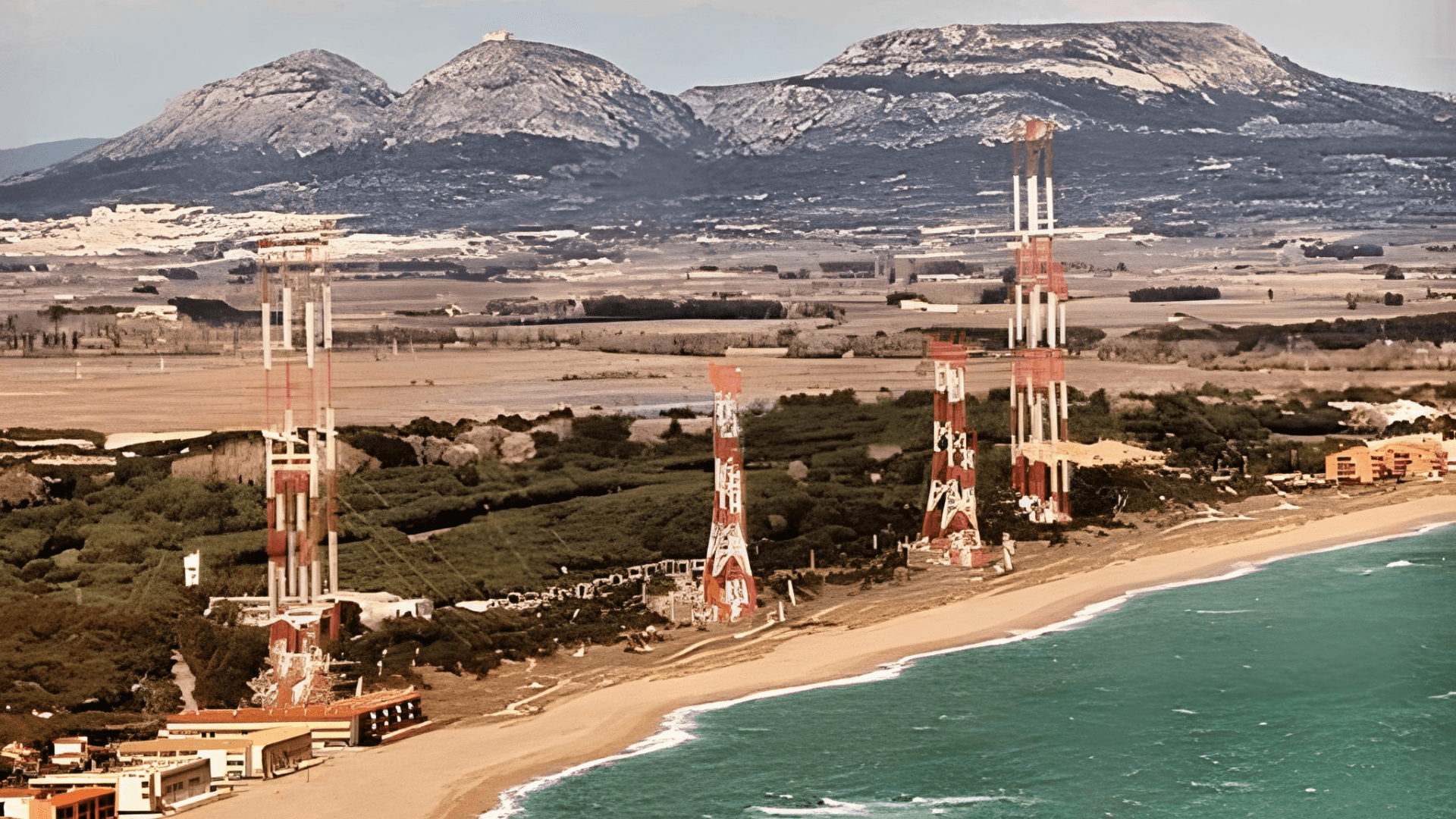
In Pals, about a hundred kilometers from Barcelona, stands one of the strangest monuments of the Cold War. From here, American antennas on the Mediterranean coast broadcast for decades straight into the Soviet Union.
Voices Through the Static
For the people who worked at the station, Pals was never just a workplace. Almost all of them remember those years as the best time of their lives. Not because of any romantic glow around the giant antennas and transmitters, but because the work gave them something rare: the feeling that they were not simply doing a job, but taking part in a major historical operation. They were not broadcasting "into the air." They were sending voices through the Iron Curtain.
Open the website dedicated to the history of Radio Liberty in Pals, and you are immediately struck by its attention to detail. Its creator spent twelve years working at the station. For him, as for many of his colleagues, that time also became an age of freedom.
Paradoxically, the station was launched in Spain at the height of Franco's dictatorship, in a country ruled by censorship, political control, and fear. From authoritarian Spain, American radio spoke directly into the totalitarian Soviet Union. History, as usual, had no interest in neat ideological symmetry. All it needed was a working transmitter.
The Radio Liberty transmitting center in Pals was one of the most powerful shortwave stations in the world. It first went on the air on March 23, 1959, at 3:05 in the morning, and delivered its final broadcast on May 25, 2001, at ten o'clock.
By the late 1960s, six shortwave transmitters, each delivering 250 kilowatts, were operating in Pals. Thirteen metal towers stood right on the Mediterranean shore, producing a combined power of 1,500 kilowatts.
But the station's true strength went beyond raw wattage. Engineers built a system that could combine four 250 kW transmitters into a single antenna, generating a signal of up to one million watts. This beam was aimed at Moscow so that Soviet jamming stations could never fully drown it out.
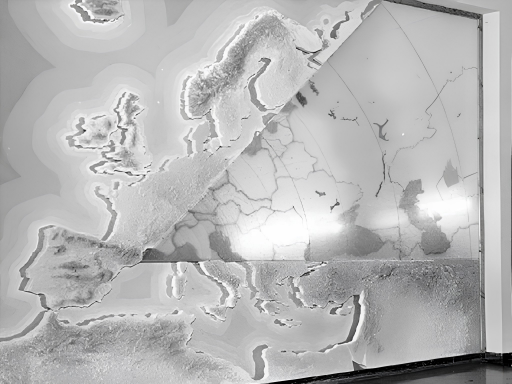
Map of shortwave signal coverage, 1966. Source: Radioliberty.org
The first such high-power broadcast went out on May 8, 1968, at noon. Its estimated audience exceeded seventy million people. The signal reached not only central Russia, but also the Caucasus, the Baltic republics, Siberia, and other distant parts of the USSR.
The Machine Against the Jammers
The site for the station in Pals was not chosen by chance. It came only after meticulous engineering surveys. Six powerful transmitters were installed there, along with four curtain antennas. In front of them stretched the Mediterranean itself, a vast natural mirror for radio waves.
A one-million-watt signal left the antennas at a precise angle of 4.3 degrees, bounced off the ionosphere, and reached Moscow. From there, it could travel farther, into Siberia, across other regions of the USSR, and around the planet. Eventually, the signal returned to Earth in what engineers called the skip zone, a dead reception zone roughly ten kilometers from Pals.
The station's geography and technical design created what the Americans called "twilight immunity." At certain hours, especially in the fragile transition between day and night, Soviet jammers simply could not keep up. For two or three hours a day, shortwave slipped through the empire of noise.
At its peak, the station employed around 200 people. Alongside the technicians and service crews, there were editors and translators. They prepared material from Spain, cleared through Franco's censorship, before sending it on to Radio Liberty's main editorial offices.
The complex covered some 330,000 square meters. Warehouses were stocked with spare parts for transmitters and antennas. Some components had to be built on site because nothing like them existed anywhere else. Much of the material was sourced locally.
The staff earned roughly twice the normal Spanish wage. They had medical insurance, a company bus, private security, video surveillance, their own gas station, doctors, cooks, gardeners, mechanics, and other support workers hired from nearby towns and villages. For Spain at the time, this was almost unreal corporate luxury.
In essence, Pals was a fully autonomous broadcasting center. Two small studios were built there just in case, but the main programs and content were produced in the United States and Munich. Pals was not an editorial office. It was a transmission center: finished material arrived there and went on air toward the Soviet Union.
In the beginning, reels of recorded programs were flown on regular passenger flights from the United States and Munich to Barcelona, then driven to Pals and put on air. Later, programs came by telephone line, and eventually by satellite.
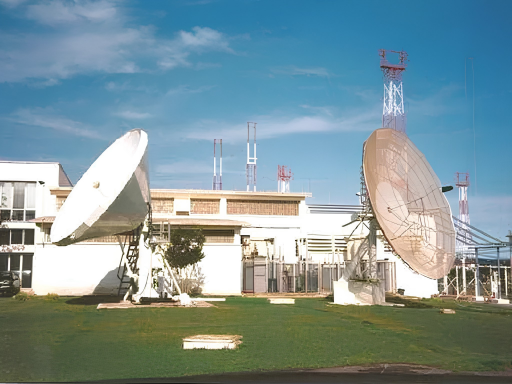
Parabolic antennas at the Radio Liberty complex, 1995. Source: Radioliberty.org
Radio Liberty maintained an almost continuous shortwave presence, up to twenty-four hours a day, with repeats, different time windows, and carefully chosen frequencies designed to dodge the jammers and reach every time zone across the Soviet landmass.
The schedule included news, analysis, interviews, human rights reports, readings of samizdat, literary programs, and cultural debates. In the 1980s, listeners could hear shows like Over the Barriers and Broadway, 1775, along with programs about Sakharov, the war in Afghanistan, and the Polish crisis.
And it was not only in Russian. Radio Free Europe / Radio Liberty broadcast in more than twenty languages of the USSR and Eastern Europe: Ukrainian, Belarusian, Lithuanian, Latvian, Estonian, Georgian, Armenian, Azerbaijani, Tatar, Bashkir, Kazakh, Uzbek, Turkmen, Kyrgyz, and many others.
This was never just a radio station.
It was an entire infrastructure of alternative reality, built for millions of people locked inside the Soviet information cage.
Empire of Noise
The Soviet authorities fought the "enemy voices" with desperation. To silence them, they built a vast network of jamming stations across the USSR.
These stations worked like giant noise factories. On the exact frequencies of Radio Liberty, the BBC, or Voice of America, they unleashed shrieks, crackles, howls, artificial speech-like signals, and thick static that turned the airwaves into an unlistenable mess. The goal was brutally simple: make sure no one could catch even one coherent sentence.
In the central Moscow control room, operators monitored the schedules of Western stations. At regional suppression posts, they watched panoramic spectrum displays and manually switched transmitters to the right frequency the moment a forbidden signal appeared. The state had created an entire industry of noise simply to stop its own citizens from hearing one extra word.
Yet jamming never worked everywhere. In big cities and their suburbs, the interference was crushing. But in the countryside, on the edges of the empire, and in border regions, Western stations often came through surprisingly clean. So people drove out to villages, listened at night, dragged their radios closer to the window, climbed onto balconies or rooftops, and hunted for one clear frequency.
In late November 1988, the Soviet authorities officially ended the jamming of Western radio stations, including Radio Liberty. The system that had spent decades and vast resources trying to silence voices from outside finally admitted defeat.
Or, more precisely, it simply took a pause.
When the System Found Itself in the Jammer
The last leader of the USSR, Mikhail Gorbachev, experienced the terror of an information blockade firsthand in 1991.
During the August coup, he was locked inside the "Zarya" state residence in Foros, Crimea. All official communication lines were severed. No normal radio, no television, no connection to what was unfolding across the country.
He learned the news through a shortwave receiver. The BBC, Voice of America, Radio Liberty, the very same "hostile voices" the Soviet regime had spent decades trying to jam and silence.
The man who had abolished the jammers found himself, just three years later, trapped inside a total information vacuum. Cut off from his own country in Foros, Gorbachev tuned in to Western radio stations to understand what was happening to the state he still formally led.
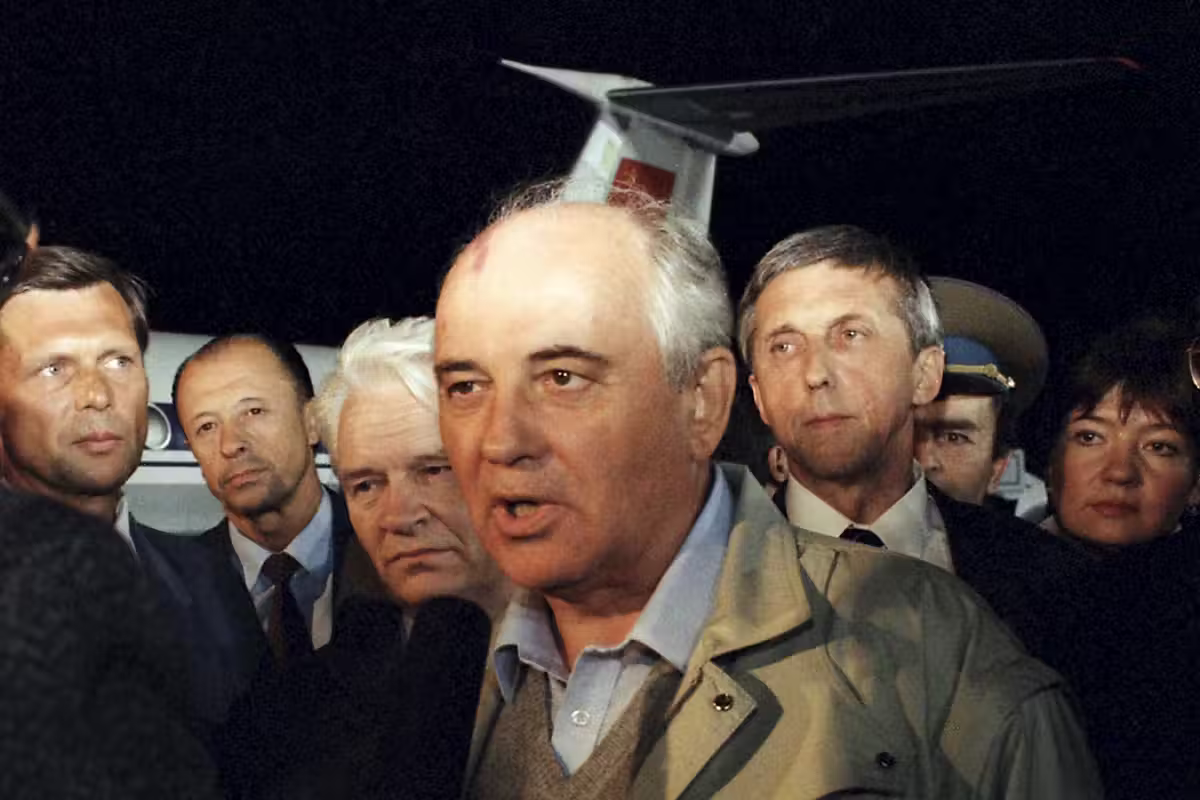
Mikhail Gorbachev speaks to a Soviet TV reporter at Vnukovo Airport outside Moscow after the failed August 1991 coup attempt. Source: AP Photo.
The antennas the Soviet system had fought so hard to drown out became, in its final hour, the last window into reality for its final ruler.
Pals. Foros. 1991.
The circle had closed.