Munich Security Conference, February 14, 2026: Germany, the Netherlands, France, Sweden, and the United Kingdom announced that lab tests detected epibatidine in Alexei Navalny's body — a rare toxin derived from the skin of a South American frog. The EU and the United States had already blamed the Kremlin for his death. Now they say they have proof.
The toxin shuts down breathing. Death comes quietly — almost like divine punishment — and leaves little trace.
Two years after the opposition leader's death — the man some Western officials call "Vladimir Putin's enemy" — the word poison has returned to global politics. As it did in the age of the Borgias. As it did at the Ottoman court.
Poisonings were never just crimes. They removed heirs, ignited wars, shifted power — and forced chemistry and forensic science to evolve.
Not the Perfect Crime
Poison was likely the first "perfect" crime long before forensic science existed. It was indistinguishable from illness, and death could therefore be attributed to tragic coincidence or natural causes.
The true cause of the sudden death of the ruler of Tuscany, Francesco I de' Medici, and his wife Bianca Cappello in 1587 was uncovered only 417 years later.
In 2004, during an exhumation, toxicologists in Florence found arsenic concentrations in the couple's hair, bones, and tissues thousands of times above normal levels. Until then, official records had claimed they died of tropical fever — the symptoms seemed to fit: vomiting, swelling, delirium. Yet contemporaries and later historians had their suspicions. They were confirmed: the killer was Francesco's younger brother, Ferdinando I de' Medici, who went on to take the throne.
The poisoning marked the end of the Medici's darker chapter and led Tuscany, under Ferdinando, toward advantageous diplomatic alliances, expanded trade, and economic growth. Arsenic rewrote history. Brutally and coldly.
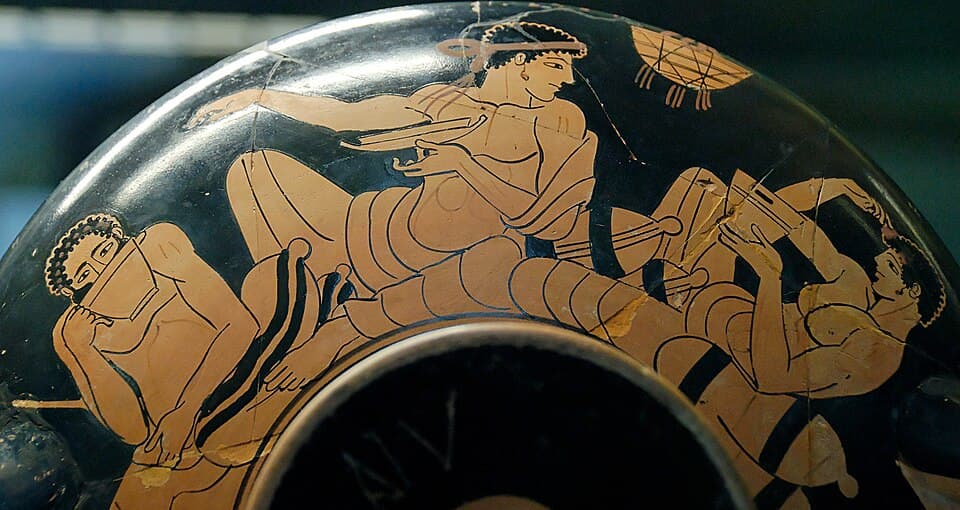
Even in Ancient Rome, arsenic and hemlock killed emperors, senators, and rivals. People often suspected the true cause of sudden deaths, but proving murder was almost impossible. Most often, poison was slipped in during banquets — into wine, mushrooms, or sweets.
In 54 CE, Emperor Claudius died after dinner. According to ancient historians, he was poisoned with mushrooms prepared by the court poisoner Locusta on the orders of Agrippina, Nero's mother. The aim was clear: to clear the path to power for her seventeen-year-old son.
Under Nero himself, Locusta continued to work at court, and poison became a tool for removing potential rivals — from those with claims to the throne to members of the senatorial elite. Fear of conspiracy pushed Nero toward preemptive killings. In 68 CE, having lost the support of the army and the Senate, he took his own life. Rome descended into the Year of the Four Emperors.
Roman elites kept servants who tasted their food and drink before them. That is how the profession of the taster emerged — and with it, the custom of clinking glasses at the table. It was not romance but fear that led people to strike their cups so that wine might spill from one into another — leaving a poisoner no safe way out.
Poisons were also used as a method of execution. In 399 BCE, Socrates — later called the father of Western thought — was ordered to drink hemlock after being convicted of "corrupting the youth" and "impiety." Paralysis gradually rose from his legs to his chest; he died surrounded by his disciples.
That execution changed the course of philosophy. After his teacher's death, Plato founded the Academy, which endured for more than nine centuries.
Poison changed history. It allowed elites to eliminate opponents without waging war and without attracting suspicion.
Cantarella was the legendary toxin of the Renaissance. It was widely associated with the Borgia family. The exact recipe has been lost. It is believed to have contained arsenic, putrefactive alkaloids, and possibly phosphorus or strychnine.
The Borgias allegedly used cantarella against papal cardinals, candidates for the papal throne, and even relatives who stood in the way of their political ambitions. Ironically, they themselves were later said to have fallen victim to poisoning.
Poisons often appeared where politics was conducted quietly. For centuries they served as a "silent weapon" in the Ottoman Empire. In its harems and palaces, far from public view, sultanas, princes (şehzades), and viziers were poisoned. Toxins were mixed into food, sherbet, garments, and medicine. Brothers and heirs were eliminated to secure the throne in blood. In time, this practice hardened into what became known as the "law of fratricide."
Rumors of suspicious deaths spread far beyond palaces, cities, and states. They crossed eras and generations, leaving many questions unresolved.
Even two centuries later, Napoleon's death remains a subject of toxicological debate: stomach cancer — or chronic arsenic exposure?
When Science Began to See Murder
In 1836, British chemist James Marsh invented a test that changed the rules. He was furious after the John Bodle case (1832–1833): arsenic found in the victim's coffee decomposed before trial, the jury refused to rely on testimony alone, and Bodle was acquitted. He later confessed. Marsh decided it would not happen again.
He dissolved the sample in acid and added zinc — arsine gas (AsH3) formed. When ignited or passed through a heated tube, the gas decomposed, leaving a gray-black metallic mirror of arsenic on cold glass or porcelain. Permanent. Visible. Irrefutable. For the first time, poison ceased to be suspicion. It became evidence a jury could see.
Fourteen years later, in 1850, Belgian chemist Jean Servais Stas solved what many considered impossible: isolating plant alkaloids from a decomposing corpse. The case involved Count Hippolyte de Bocarme, who poisoned his brother-in-law Gustave Fougnies with nicotine extracted from tobacco. Stas worked for three months on the organs — deproteinization with ethanol, extraction with ether — and isolated pure nicotine. In 1856, Friedrich Julius Otto refined the method into the systematic Stas-Otto procedure, which became the gold standard for extracting alkaloids such as strychnine, morphine, and cyanide from tissues.
High-profile trials of the 1840s–1860s — Marie Lafarge in France, William Palmer and Madeleine Smith in Britain — made one thing clear: arsenic was no longer a guarantee of impunity. Forensic toxicology was born as a weapon of the state against the "perfect crime." Chemistry exposed what for centuries had been attributed to "apoplexy" or "malignant fever."
Here lies the paradox: as soon as old poisons became detectable, the search for new ones intensified. Poisoners turned to substances that were less studied, faster-acting, and harder to trace — aconite, ricin, later polonium, Novichok, epibatidine. Science learned to uncover murder. At the same time, it gave poisoners new instruments.
The race continues.
Poison in the Arsenal of Power
Poison has always been the weapon of those who operate from the shadows. South American Choco and Embera tribes coated their arrows with batrachotoxin from Phyllobates terribilis frogs or with curare derived from Strychnos toxifera vines. They did not know the chemical formulas, but they knew the effect: the body stiffens, muscles become paralyzed, breathing stops.
In the second half of the twentieth century, empiricism gave way to control. Epibatidine was isolated from the skin of an Ecuadorian frog in the 1970s; its structure was described in the early 1990s, after which the compound began to be synthesized in laboratories. In microdoses, it showed powerful analgesic potential. In larger doses, it caused hypertension, seizures, and respiratory paralysis. The difference lay in precise dosing.
Then the state entered the field.
In the 1950s, VX — one of the most toxic nerve agents ever developed — was synthesized in the United Kingdom. In the 1970s, the Soviet Union launched the "Foliant" program, under which substances later known as "Novichok" were developed. They were designed to bypass existing international restrictions. This was no longer alchemy or court intrigue, but industrial chemistry and strategic planning.
The Soviet "Camera" — later known as Laboratory No. 1, then No. 12, and "Laboratory X" — had operated since the 1920s. Under the direction of Grigory Mairanovsky, cyanides, ricin, and alkaloids were tested on prisoners. The objective was simple: the toxin had to kill quickly and leave no obvious trace. Allegations of the poisoning of Maxim Gorky are still debated. The circumstances of Stalin's death remain disputed as well.
Over time, poison became not only a means of elimination but of discipline. It operates on two levels: physical and psychological.
1978 — London. Georgi Markov, a Bulgarian dissident who criticized the regime from exile. His murder with ricin sent a message to other defectors: borders do not protect you. It was not revenge. It was a warning.
2006 — London. Alexander Litvinenko, a former FSB officer who publicly accused Russian security services. A British investigation concluded that his killing was probably approved at the highest levels of the Russian state. Polonium — a substance linked to nuclear infrastructure — turned the assassination into a demonstration of capability. Not just elimination, but a reminder: the state can reach you.
2018 — Salisbury. Sergei Skripal, a former GRU officer exchanged in a spy swap. The use of "Novichok," a substance from a military program, signaled a return to intelligence logic: betrayal is not forgiven. Even years later.
And finally, 2017 — Kuala Lumpur. Kim Jong Nam, the half-brother of North Korea's leader, died after contact with VX at an airport. This was no longer merely the killing of a defector. It was a modern version of dynastic retribution — fratricide in the service of power.
Ancient palaces, Ottoman harems, Renaissance intrigues — it might seem that all of this belongs to the past. Yet poison once again becomes an instrument of holding power.